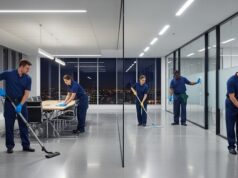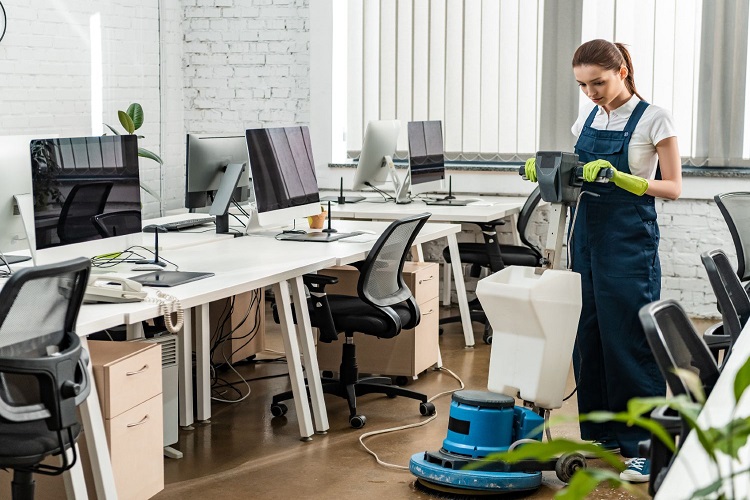
might seem like the invisible work that happens after hours, when the last employee has gone home and the building falls quiet. Yet this essential service forms the backbone of workplace health, productivity, and ultimately, corporate success in ways few executives fully appreciate.
Table of Contents
The Psychology of Clean
There’s something about walking into a pristine office that shifts the mind into a different gear. The subtle gleam of polished surfaces, the faint scent of cleanliness, the orderliness of a well-maintained space—these elements speak directly to our primitive brains long before conscious thought begins.
Research consistently shows that employees working in clean environments:
- Experience 15% higher productivity levels
- Report significantly lower stress levels
- Take fewer sick days throughout the year
- Demonstrate greater workplace satisfaction
- Collaborate more effectively with colleagues
“In Singapore’s competitive business landscape, maintaining immaculate corporate premises isn’t merely about appearances—it’s about creating environments where high-performance work becomes inevitable rather than aspirational.”
Beyond Aesthetics: The Health Imperative
The corporate world learned harsh lessons during recent global health crises. What once seemed like reasonable cleaning protocols revealed themselves as woefully inadequate when subjected to microscopic scrutiny.
Modern corporate cleaning isn’t simply about removing visible dirt. It’s a sophisticated system of disinfection, air quality management, and surface protection that creates invisible barriers against microbial threats.
The Hidden Costs of Cutting Corners
Businesses that view cleaning as merely an operational expense often fail to recognise the hidden costs of inadequate maintenance. Beyond the immediate health implications, substandard cleaning practices lead to accelerated wear and tear on expensive office assets—from carpeting and upholstery to technology and architectural finishes.
What appears as a cost-saving measure in the short term inevitably translates to premature replacement costs, creating a false economy that shrewd business leaders are increasingly recognising and avoiding. The mathematics of proper maintenance versus replacement makes a compelling case for investment in quality corporate cleaning services.
The Forgotten Touchpoints
The average office worker touches over 300 surfaces before lunch. Consider this partial inventory of daily contact points:
- Lift buttons and door handles
- Shared printers and copiers
- Conference room equipment
- Communal kitchen appliances
- Washroom facilities
- Desk phones and computer peripherals
Each represents a potential transmission point for illness. Professional corporate cleaning services understand these pathways intimately, focusing their efforts not just on visible cleanliness but on breaking chains of contamination.
“Effective corporate cleaning isn’t measured by what’s visible, but by what becomes invisible—pathogens, allergens, and environmental toxins that would otherwise compromise workplace health.”
The Environmental Calculation
In our age of ecological awareness, cleaning practices carry environmental implications that extend far beyond the office walls. Progressive corporate cleaning embraces:
- Microfibre technology that reduces chemical usage
- Steam cleaning systems that disinfect without harsh agents
- Concentrated cleaning solutions that minimise packaging waste
- Biodegradable products that break down harmlessly after use
- Water-conserving equipment that reduces resource consumption
These approaches don’t just protect the planet—they protect people, reducing employee exposure to potentially harmful substances while maintaining exemplary standards of cleanliness.
The Night Shift: Unsung Office Heroes
While executives and employees cycle through the workday, a parallel workforce operates in the margins of corporate time. These cleaning professionals—often invisible to the daily operation—apply specialised skills and knowledge to maintain environments that others take for granted.
Their work requires physical stamina, attention to detail, and increasingly, technical knowledge about chemical interactions, surface materials, and infection control protocols.
“In Singapore’s finest corporate environments, cleaning isn’t treated as unskilled labour but as essential professional services requiring training, certification, and ongoing development.”
The Strategic Investment
When businesses view cleaning as a cost centre rather than a strategic investment, they often make false economies that ultimately undermine organisational goals. Cutting corners on corporate cleaning creates cascading effects:
- Increased employee absenteeism due to workplace illness
- Reduced cognitive function in dusty or poorly maintained environments
- Compromised impressions for clients and potential partners
- Accelerated deterioration of expensive fixtures and furnishings
- Lower overall employee engagement and workplace pride
The mathematics is straightforward: investing appropriately in professional cleaning services yields returns through enhanced productivity, reduced sick leave, and extended asset lifespan.
The Future of Workplace Cleanliness
As workplaces evolve, so too does the science and art of keeping them clean. Tomorrow’s corporate cleaning will likely incorporate:
- Antimicrobial surface treatments that provide lasting protection
- Air purification systems integrated with building management
- Autonomous cleaning robots for routine maintenance
- UV disinfection technology for overnight sanitization
- Data-driven cleaning schedules based on actual usage patterns
These innovations promise to make cleaning more effective, more efficient, and more responsive to the needs of modern business.
The humble task of keeping workspaces clean has transformed into a sophisticated discipline at the intersection of health science, environmental stewardship, and workplace psychology. Far from a simple matter of appearance, effective corporate office cleaning now represents an essential investment in human capital, brand perception, and sustainable business practice.